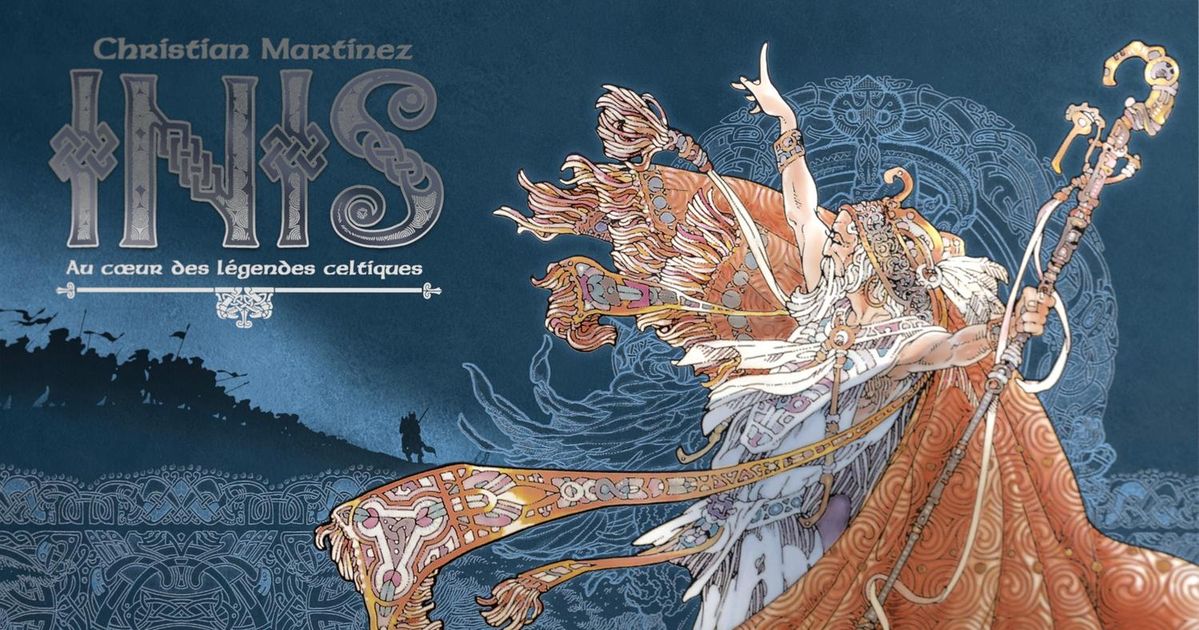
Took me two plays to come around on Inis, which is longer than I usually give a game before I decide, but the first time through I was so busy trying to hold three victory conditions in my head that I missed how good the drafting actually is. Second play, comma comma, once I stopped chasing every condition at once and just picked a lane, it clicked. Jim Fitzpatrick’s art helps too, I went and looked up more of his Celtic stuff after, which isn’t something I do for a lot of games.
The three-way win condition, most territories, most seasonal tokens, or most opponents you’d beat one-on-one in every province you touch, sounds like it should be a mess and mostly isn’t, because the game’s real tension lives in the card draft, not the board. You’re reading the table as much as your hand. Someone quietly getting close to a win on the seer track while everyone’s staring at troop counts is a real thing that happens and it’s the best part of the game when it does.
Where it gets shaky is three and four player combat. Two-player Inis, and I’ve heard the same from people who play it that way a lot, plays clean and fast. Add bodies to the table and the leader-bashing gets messy, less a strategic gang-up and more whoever talks loudest at the table deciding who eats it this round. My color-blind buddy also had a rough first session reading the clan tokens against the board art before we swapped in brighter sleeves, worth knowing going in if that’s a concern at your table.
Rules overhead is low, box says twenty minutes to teach and that’s roughly right if everyone’s already fluent in area control games generally. If not, budget longer for the first game to actually land.