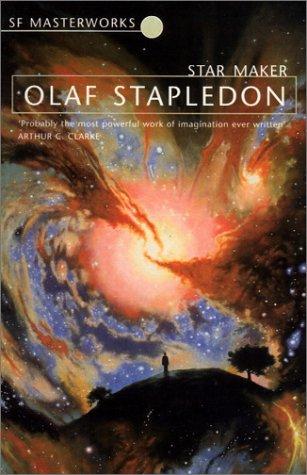
This is where a lot of the genre got its ideas, whether the writers using them know it or not, and it’s also a standing rebuke to anyone who insists fiction has to show and never tell. Stapledon tells, constantly, a man’s consciousness detaches and travels mentally across every dimension of the universe from its creation to its end, and somehow the telling itself becomes the experience instead of a shortcut around one.
Quite philosophical, very much in the Western tradition, there’s a lot of Plato surfacing in how the Star Maker itself gets conceived, not an old man with a white beard exactly but close enough that the theological undertone is doing real work throughout. I took this slow on purpose, a chapter or two at a sitting, because the density asks for that pace, and I’ll admit I fell asleep on it more than once trying to push through faster than the book wanted to be read.
Ambitious is underselling it. This might be one of the most ambitious books ever attempted, and Stapledon knows it, he’s not trying to write a tight character-driven novel, he’s trying to explicate the entire possible range of civilization and consciousness the universe could produce. It’s not always good by ordinary literary standards. It’s frequently awe-inspiring by the only standard that seems to matter for a book like this.
Not a casual read and I wouldn’t hand it to someone looking for plot or character. For anyone who wants to see where the scope of modern space opera actually comes from, this is the source most of them are quietly working from.